
You’re standing in a BSL-3 (biosafety level 3) suite, hands on a pass-through autoclave that splits clean and dirty sides. The goal isn’t just sterilization—it’s containment. You can feel the stakes. Doors must interlock with room pressure, the bioseal (wall seal between clean and dirty rooms) can’t leak, and every drop leaving the chamber is accounted for. Miss one tie-in or drain spec, and you’ve got exposure risk, not a cycle complete.
We see it during retrofits: a perfect hospital cycle fails here because vacuum exhaust and condensate weren’t decontaminated or temperature-verified. The Canadian Biosafety Standard (CBS) expects sealed penetrations, validated effluent treatment, and auditable controls. Translation: no shortcuts. One unverified effluent discharge or bioseal gap can trigger a reportable incident and downtime. First, understand why BSL sterilization isn’t a hospital steam cycle.
Since we review UHA-51 packages weekly, here’s the plain-English map. Part UHA sits inside ASME (American Society of Mechanical Engineers) Section VIII, Divisioa
Before we hand you the blueprint and URS (user requirements specification), here’s why BSL isn’t a hospital cycle. CSSD (central sterile services) chases sterility; BSL (biosafety level) labs protect the containment envelope. That means pressure cascades between zones, pass-through autoclaves splitting dirty/clean sides, and controls that prioritize airflow and door status as much as temperature.
Orientation matters. The hot-side door faces containment; the cold-side door faces clean support. Interlocks tie to room pressure and BMS (building management system) points so a door can’t open when the cascade is out of spec. In Canadian labs, we seal penetrations with welded bioseal frames and pressure-test the wall interface so aerosols can’t bypass the chamber.
In Canada, PHAC’s CBS (Public Health Agency of Canada’s Canadian Biosafety Standard/Handbook) sets expectations for containment, records, and effluent handling. Pressure equipment typically requires a provincial CRN (Canadian Registration Number) for the vessel and fittings. We’ll translate these into design, documentation, and inspection steps you can audit against.
n 1 and sets special rules for high‑alloy materials; UHA‑51 covers austenitic stainless steels (304L/316L and similar) and their welds. MDMT (minimum design metal temperature) is the coldest temperature your vessel must withstand; at cryogenic levels (around −320°F), approvals pivot from base metal to weld metal and the HAZ (heat‑affected zone). Impact testing uses the UG‑84 framework (Charpy V‑notch energy and sometimes lateral expansion) with UHA‑specific allowances. That’s the playing field.
UHA‑51(a)(4)(a) can shrink the test burden by focusing on weld‑metal toughness at MDMT when ferrite and process controls are proven. Recent editions clarified acceptance and broadened compatible filler choices—for example, qualifying 308L deposit on 316L plate under documented dilution and ferrite control. Always confirm your edition and jurisdiction before you book the lab.
If you’re heading for provincial approval, align this plan with your Canadian Registration Number filing: cite the edition, list MDMT, tie WPS (Welding Procedure Specification) and PQR (Procedure Qualification Record) references, and show acceptance criteria. That alignment speeds reviews.
Small misses cause big risk. Unsealed conduits leave a 3 mm leak path during negative-pressure swings. Light-gauge bioseal frames flex, cracking sealant. Pre-sterilization venting without HEPA (high-efficiency particulate air) filtration can push aerosols toward the clean side. Absent door/pressure interlocks allow both doors to unlatch during a blip. No HEPA housing dP (differential pressure) or scan ports means a torn gasket goes undetected until mapping fails.
These aren’t theoretical. A condensate line that discharges above 60°C can trigger environmental alarms and compliance actions. A drain backflow or vacuum pump exhaust leak can halt operations for 48–72 hours while EHS (environment, health and safety) investigates and the suite is decontaminated. Paper-only batch records without 21 CFR Part 11 (electronic records/e-signatures) create audit gaps that force repeat PQ.
Validation often misses BSL specifics: no HEPA housing integrity test protocol, no thermal confirmation of effluent hold (time-at-temperature proof), and IQ/OQ/PQ (installation/operational/performance qualification) not executed under actual BSL conditions and loads. Result: sterile cycles on paper, but containment and data integrity unproven.
Typical units aren’t built for pass-through orientation, double-door interlocks, or pressure-cascade coordination. They lack native tie-ins for EDS (effluent decontamination systems), drain temperature verification, and sealed cable/conduit penetrations. In retrofits, frames don’t match wall types, drains lack air gaps or slope, and conduits aren’t gasketted—so leaks, backflow, and code flags show up at SAT.
Then commissioning snowballs. Vacuum capacity sized for instruments can’t clear porous cages, so Bowie–Dick (air removal) fails and Fo (lethality) mapping shows cold spots. Wet loads spike turnaround times. Low ceilings conflict with vertical doors, and tight alcoves block maintenance access—extending SAT and OQ by weeks and inflating downtime risk during early operations.
You need a BSL-ready blueprint—a system-of-systems that treats the envelope, effluent, utilities, validation, and day-to-day operations as one design. That’s exactly what we build next.
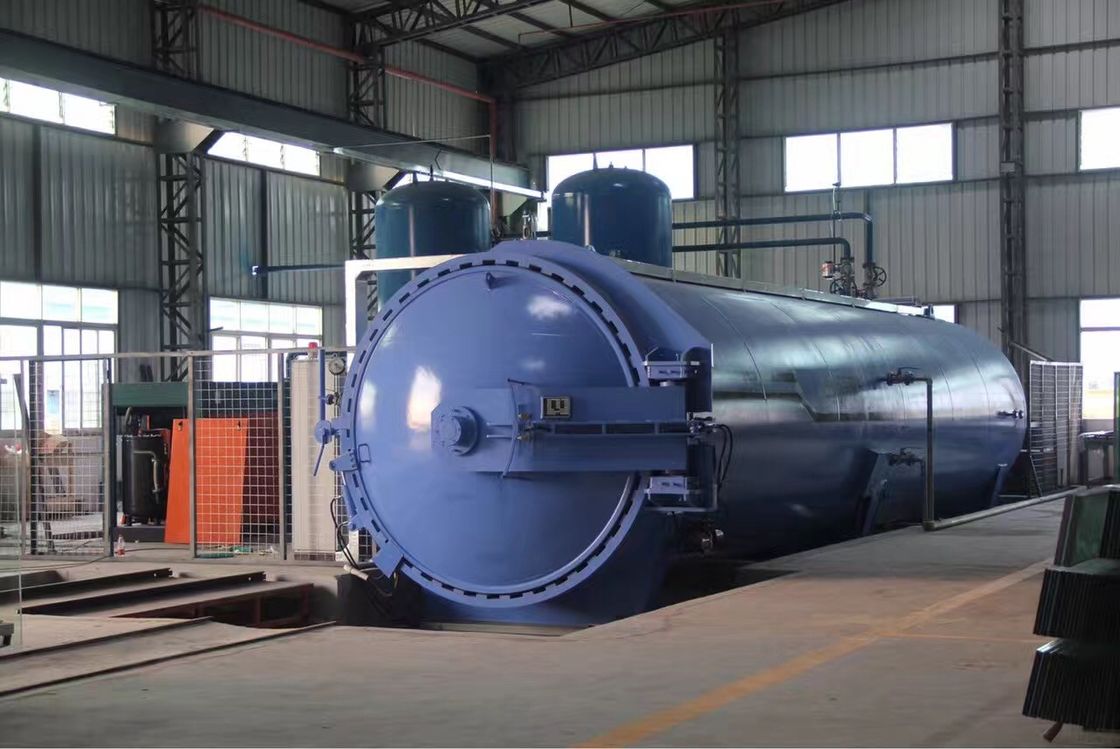
You asked for a system-of-systems—here’s the BSL (biosafety level) autoclave blueprint we build. It starts with a sealed pass-through envelope using a bioshield frame (a rigid, hermetic wall connection), an effluent decontamination module, and pressure/door interlocks that protect the pressure cascade. We specify a monitored HEPA (high-efficiency particulate air) or thermal unit for exhaust and effluent, clean steam generation, and condensate management that keeps drains compliant. The vessel is 316L stainless with sanitary effluent paths, high-durability gaskets, and service-from-cold-side access so maintenance never breaks containment. Then we stack validation—IQ/OQ/PQ (installation/operational/performance qualification)—on top.
Our chambers and jackets are code-stamped to ASME BPVC Section VIII (pressure vessel code) and registered with CRN (Canadian Registration Number) where required. Drain lines are sloped for free drainage, backflow is prevented with air gaps, and condensate is cooled and temperature-verified before discharge. Controls integrate to your BMS (building management system) via BACnet/Modbus for door status, interlocks, alarms, and cycle data. We design access to all consumables—gaskets, filters, pumps—from the cold side, and we include spare I/O (input/output) for future sensors. Load probes, validation ports, and ergonomic carts round out a package that fits low-ceiling suites.
Controls monitor DP (differential pressure) between zones, lock doors based on room status, and enforce safe-to-open temperature/pressure. HEPA housings include DP and integrity checks; thermal systems verify outlet temperature and hold time before discharge. Every event, alarm, and change is logged with user roles, e-signatures, and audit trails (21 CFR Part 11-ready) to keep records inspection-proof.
Scan the core components below—use it as your URS (user requirements specification) starter.
Use this quick matrix to compare capex (purchase cost), opex (operating cost), validation burden, redundancy, and retrofit impact.
| Criteria | HEPA Filter (in-housing sterilization) | Thermal Effluent System | Notes/When to choose |
|---|---|---|---|
| Capex (purchase cost) | Lower to moderate; compact skid | Higher; heat exchanger (HX) and controls | Choose HEPA when budget or space is tight |
| Opex/Maintenance (operating cost, upkeep) | Integrity tests; periodic filter replacement and waste handling | Steam/energy cost; HX service and valves | Choose thermal when filter waste disposal is problematic |
| Validation (testing burden) | Water intrusion and integrity tests are straightforward | Outlet temperature verification and hold-time mapping | Choose based on internal QA (quality assurance) bandwidth |
| Retrofit feasibility | Easier to retrofit; minimal piping and footprint | More invasive piping and space needs | Thermal suits greenfield builds with room and utilities capacity |
We fabricate bioshield frames from stainless plates with continuous neoprene/EPDM (ethylene propylene diene monomer) gaskets and sealed conduits, then compress the frame to the wall to form a hermetic seal. The design isolates vibration with elastomer pads and keeps service access on the cold side. 316L fasteners and covers resist corrosion, and penetrations include gland fittings rated for negative/positive pressures. Result: the autoclave becomes part of the wall, not a gap in it.
At the wall opening, we use backer rods and compatible sealants, add inspection ports for periodic checks, and include drainable channels so any condensation cannot track across zones. Conduits are packed and sealed, with removable compression rings for maintenance without cutting. We label all boundary points for SAT (site acceptance test) inspection and future audits, and we provide a torque map so maintenance can re-establish compression after gasket replacement.
During design and commissioning, confirm these practical details before signoff.
Pressure test: require leak checks across zones—and then prove it. We run IQ/OQ/PQ (installation, operational, performance qualification) with HEPA (high‑efficiency particulate air) housing integrity tests on a defined cadence, thermal mapping, and biological indicators (BIs) for worst loads. Daily Bowie–Dick (air removal) where applicable, weekly BI/CI (chemical indicator) checks, and secure batch records keep you audit‑ready. This aligns with PHAC CBS (Public Health Agency of Canada’s Canadian Biosafety Standard) expectations and ISO 17665/EN 285 principles for steam sterilization.
Acceptance criteria are explicit and tied to BSL conditions. Liquids: coldest probe at 121°C achieves Fo ≥ 12 minutes. Porous loads/cages: uniformity ±1.0°C at dwell; Bowie–Dick passes. Waste: penetrated bags with venting; condensate/vacuum effluent temperature‑verified before discharge. Drains: outlet ≤ 60°C, no backflow. Interlocks: opposite doors cannot open with cascade out of spec; alarms captured. Data: 21 CFR Part 11 enabled with audit trails. Next, we’ll lock in utilities and the code‑stamped vessel to make this repeatable.
In Canada, autoclave pressure components often require CRN (Canadian Registration Number) and ASME BPVC (Boiler and Pressure Vessel Code) compliance. We design, register, and stamp vessels accordingly—see our ASME pressure vessels for how we meet code and inspection requirements.
Use this quick matrix to map components to verification, frequency, and records.
| Component | Primary verification | Frequency | Record type |
|---|---|---|---|
| HEPA housing (filter and frame assembly) | Integrity test (e.g., water intrusion or aerosol challenge) | Per SOP, typically quarterly or after service | Test report and differential-pressure trend log |
| Thermal effluent system (EDS skid) | Outlet temperature and hold-time verification | Commissioning, then semiannual or per risk | Calibration certificate and batch cycle records |
| Door interlocks | Functional interlock and safe-to-open tests | At commissioning, then per SOP schedule | IQ/OQ checklist with pass/fail records |
| Pressure cascade between hot and cold sides | Differential pressure monitoring with alarm limits | Continuous with BMS logging and alerts | Trend logs, alarm history, and acknowledgments |
You’ve got trend logs and alarm histories dialed in—so why do cycles still drift on Mondays? Start with clean steam: if plant steam carries oils or high TDS (total dissolved solids), use a clean steam generator for sterile-grade supply. Return condensate to a receiver, not the chamber drain. Drains must be sanitary, sloped 1–2% to a trapped air gap, and never allow backflow. Keep discharge at or below 60°C. Protect 316L stainless steel by holding chlorides under ~50 ppm and controlling pH and conductivity.
Dry, stable steam makes validation boring—in a good way. Install a steam separator with a drip leg ahead of the control valve, and use a strainer to protect it. Pick traps to match duty: balanced-pressure thermostatic traps for tracing, free-float or inverted-bucket on headers, and thermodynamic on high-pressure drips. Purge NCGs (non‑condensable gases) at startup. Add a sample cooler to check boiler TDS and silica. For residue control, fit a final steam filter and avoid boiler additives that carry amines into the chamber.
To stabilize demand spikes, we size steam accumulators from our pressure vessels for sale. Pair the skid with pressure vessel tanks for clean steam and condensate storage. And to keep pneumatic door seals and valves dry, specify a receiver matched to a pressure vessel for desiccant dryer. The result: steady pressure, reliable make‑up water, and clean, low‑dew‑point air that protects gaskets and controls. With the backbone steady, we can right-size chambers and cycles next.
With the backbone steady, let’s right-size your chamber and cycle mix. Start with weekly mix—liquids, porous instruments, cages/bedding, and biohazardous waste—and the turnaround you need. Bigger chambers move more per run but add heat-up time; smaller chambers finish faster but run more. We standardize racks, quick-change carts, and probes to lock repeatability. Example: 40 cage loads/week with 30% liquids → 700–900 L, two pre-vac (pre-vacuum) porous cycles/hour plus 1 liquid cycle/hour; Fo (lethality at 121°C) targets baked into recipes.
If throughput spikes—think 80+ cage loads/week or bulky waste carts—scale two ways: parallel smaller units or one high‑volume unit. Our large-capacity autoclaves handle oversized racks and cut bottlenecks while keeping Fo (lethality at 121°C) uniformity tight. We’ll model both paths and show utility impact, then apply cross‑industry lessons to keep reliability high.
We said we’d apply cross‑industry lessons—here’s what that means for you. Aerospace cure work taught us to hold ±1.0°C across large chambers and keep vacuum integrity tight (minimal pressure loss per minute) for porous loads. High‑duty wood/rubber service drove gasket and door designs that survive 10,000+ cycles without drift. Industrial controls experience gave us redundant sensing and clean alarm logic, cutting troubleshooting time by 30% and keeping Fo (lethality at 121°C) variance under 10% in mapped cycles.
Want to see the roots? Check our aerospace autoclaves for tight thermal control, our composite autoclaves for vacuum integrity on complex, porous stacks, and our glass laminating autoclave builds for door and seal durability. Those disciplines map directly to BSL waste, cages, and liquids—reliable heat, verified vacuum, and hardware that stands up to real duty cycles.
Those same disciplines—reliable heat and verified vacuum—matter most on waste. What’s in your carts? Typically bagged solids, mixed sharps, occasional liquid slurries, and bulky cages or bedding. We design waste cycles to vent bags (pierce or vent caps), tumble racks for penetration, and, if needed, integrate shredders for volume reduction without exposing the cold side. Effluent is handled end‑to‑end: EDS (effluent decontamination system) for vacuum/condensate, fail‑close valves, temperature proof before discharge, and a condensate‑kill subcooler to keep drains at or below 60°C.
Validate waste separately from research loads so you don’t mix acceptance criteria. For waste, we place BI (biological indicator) strips deep inside the densest bags, add CI (chemical indicator) tapes on outer layers, and map Fo (lethality at 121°C) across the cart. Liquids get worst‑case volumes and venting delays. Records live in 21 CFR Part 11 (electronic records/e‑signatures) with alarm and event logs tied to door status and EDS. Result: audit‑ready proof that waste penetration and effluent kill meet your biosafety plan.
For high-throughput programs—think 500+ kg per week—our dedicated medical waste autoclaves combine shredding, dewatering, and thermal kill on one skid. If you’re running moderate volumes, we’ll configure a pass-through waste line that fits your BSL (biosafety level) suite.
Whether you’re high‑throughput or pass‑through waste, you’re ready to spec. Use this checklist—start each line with the bold label. Next, a quick BSL‑3 retrofit.
Evaluating vendors and build quality? Use industrial autoclaves manufacturers as a quick reference while you shortlist—compare chamber sizes, materials, controls, and validation support.
So what happens when you run that checklist in the real world? A BSL-3 (biosafety level 3) lab called us with 9 ft ceilings, limited plant steam, and a shared drain capped at 60°C discharge. We delivered a pass-through autoclave with a custom bioseal frame, HEPA (high-efficiency particulate air) exhaust housing with in-situ integrity testing, and door/room-pressure interlocks tied to the BMS (building management system). Results you can measure: cage-load cycle time down 18%, Fo (lethality at 121°C) variance under 10% across mapped locations, drain temperature verified below 60°C, and zero cross-door interlock faults during the first 90 days.
Here’s how the commissioning unfolded. Weeks 1–2: URS/DQ (user requirements specification/design qualification) with facilities, the BSO (biosafety officer), and EHS (environment, health and safety) aligning on loads and acceptance criteria. Week 5: FAT (factory acceptance test) with thermal mapping and data integrity challenges; we switched to an electric clean steam generator due to variable plant steam quality. Weeks 8–10: rigging in modular sections for the low ceiling, SAT (site acceptance test) I/O checks, and verified drain temperature; Weeks 11–12: IQ/OQ/PQ (installation/operational/performance qualification) passed on first attempt. Stakeholders stayed in lockstep—our controls engineer, your maintenance lead, and the BSO signed off on interlocks, alarms, and record security.
The takeaway is simple: the blueprint plus the checklist de-risked the retrofit and protected containment. Early utilities modeling and FAT thermal mapping shaved two weeks off schedule, prevented rework on drains, and kept validation boring—in a good way. Post-startup KPIs: 99.7% door/pressure compliance, no wet-load deviations, and stable cycle records with 21 CFR Part 11 (electronic records/e-signatures) audit trails. Want the same clarity for your site? Next up is the implementation roadmap we use to move you from idea to validated operation without surprises.
You wanted the same clarity—here’s the roadmap from idea to operation. Owners at each gate: Facilities, BSO (biosafety officer), EHS (environment, health and safety), QA, and team; signoffs at DQ, FAT, SAT, IQ/OQ/PQ. No surprises.
Ready to release to routine use without surprises? Book a 30-minute spec review with our engineers; we’ll tailor a custom design, align to ASME (American Society of Mechanical Engineers)/CRN (Canadian Registration Number), and map utilities. In 5 business days, you’ll have a draft layout and utility loads, plus a realistic delivery timeline.
Let’s discuss your test plan
Contact us for more information on our products and how they can fulfill your manufacturing or sterilization needs. You may also ask us about our policies, ordering and delivery process, or for other related information.
Get In Touch