Quick Answer
Transporting stainless steel tanks is a multi-phase process that starts during the design stage and includes dimensional analysis, permit acquisition, route planning, safety assessments, and coordinated on-site delivery. Every tank requires a custom transport plan because no two projects share the same dimensions, destination, or site conditions.
Why Transport Planning Starts Before Manufacturing
When procurement teams order a custom stainless steel tank, the conversation about transport often comes up late. That's a problem. The physical dimensions of a tank, its weight distribution, and the route it will travel to the installation site all need to be considered before fabrication even begins.
A tank that's designed without transport in mind can create expensive complications. Imagine completing a 40,000 kg pressure vessel only to discover that the access road to the client's facility can't support the load. Or realizing that a vessel's diameter exceeds the clearance under a bridge along the only viable highway route. These scenarios aren't hypothetical. They happen regularly when transport planning is treated as an afterthought.
That's why experienced manufacturers integrate transport feasibility into the quotation and engineering phases. At TRG Supply, this means assessing the full logistical picture alongside the engineering specifications. It's not just about building the right tank. It's about building a tank that can actually reach its destination safely and cost-effectively.
The Quotation Phase: Where Logistics Begin
Transport planning starts at the very first stage: the quote. During the quotation phase, engineers evaluate whether a tank's proposed design is transportable. This involves looking at three primary factors:
- Overall dimensions: Will the tank fit within standard road transport limits? Can it pass through the client's facility gates?
- Total weight: Does the loaded weight (tank plus transport equipment) exceed road weight restrictions?
- Destination accessibility: Are there narrow roads, low bridges, sharp turns, or other obstacles along the route?
At this stage, the manufacturer can already identify whether the project will require standard transport or an exceptional (oversize) transport arrangement. This distinction matters because exceptional transport can significantly increase the project budget. Getting accurate cost projections early helps buyers make informed decisions about tank design, material specifications, and even whether certain dimensions should be adjusted to simplify delivery.
Buyer Tip
Ask your supplier about transport feasibility during the quotation phase. Adjusting a tank's height or diameter by a small margin can sometimes eliminate the need for costly oversize permits and escort vehicles.
Understanding Transport Scenarios and Size Limits
Standard road transport in most regions operates within defined dimensional limits. While regulations vary by country, the typical thresholds are:
| Parameter | Standard Road Limit | Exceeding Requires |
|---|---|---|
| Maximum height | 4.0 meters | Oversize permit, route survey |
| Maximum width | 2.55 meters | Escort vehicles, pilot cars |
| Maximum length | 22 meters | Special trailer, advance notification |
| Maximum gross weight | 50,000 kg | Heavy-haul permit, bridge analysis |
Tanks that fall within these limits can typically be shipped on standard flatbed trailers with straightforward logistics. However, many industrial stainless steel tanks, especially large-capacity vessels used in process industries, oil and gas, or chemical storage, exceed one or more of these thresholds.
When a tank qualifies as an exceptional load, the transport company must obtain oversize permits, arrange police or pilot escort vehicles (requirements vary by region), and sometimes restrict travel to specific hours or days. In some countries, escort costs alone can add tens of thousands to the project budget. Germany, for example, requires police escorts for oversized loads, making road transport through that region particularly expensive.
Why Multiple Transport Quotes Matter
Just as buyers compare suppliers for the tank itself, it's wise to obtain multiple transport quotations. Pricing varies significantly depending on the carrier's fleet capabilities, their existing route network, and their experience with oversized industrial equipment. A carrier that regularly handles ASME-certified pressure vessels will often offer more competitive rates and fewer logistical surprises than a general freight company.
Road Transport vs. Water Transport: Making the Right Call
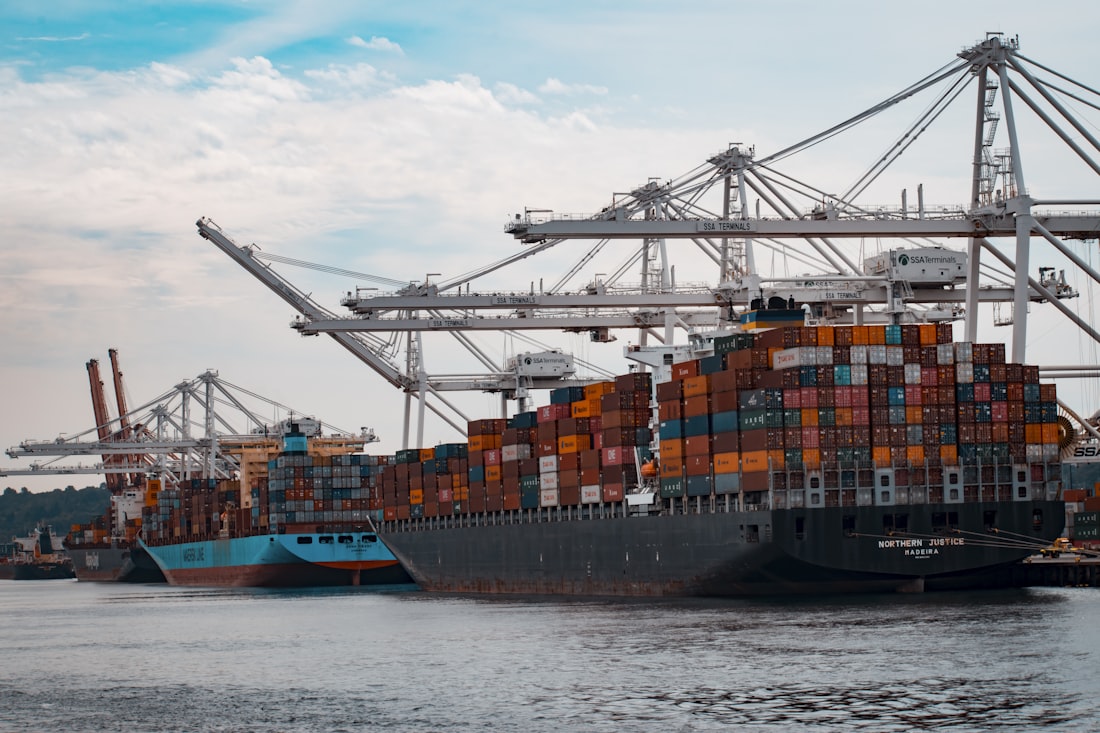
For many projects, road transport is the default choice. It's typically faster, more flexible in terms of scheduling, and less expensive for loads that fall near standard size limits. But road transport isn't always the best option.
Water transport via barge or cargo vessel becomes the better economic choice in several situations:
- Very large tanks: Vessels exceeding standard road limits by a significant margin face exponentially higher road transport costs. Water transport avoids height, width, and weight restrictions entirely.
- Multiple units: When a project involves several tanks being delivered to the same site, chartering a barge for the full batch can be more economical than arranging individual oversize road shipments.
- Waterway-accessible sites: If the manufacturing facility and the destination both have port or dock access, water transport eliminates long road hauls entirely.
- Regulatory complexity: In regions with expensive oversize road permits or restrictive travel windows, water transport often provides a simpler regulatory path.
Road Transport Advantages
Faster scheduling, door-to-door delivery, lower cost for standard loads, greater route flexibility, and widely available carrier options.
Water Transport Advantages
No road size restrictions, cost-effective for batch shipments, avoids bridge and overpass clearance issues, and reduces road wear concerns.
The decision between road and water isn't always straightforward. Factors like vessel draught (the depth of water a barge needs to float), lock schedules, and lead times for securing barge space all influence the final choice. A good manufacturer will evaluate both options during planning and present the most cost-effective recommendation to the buyer.
Engineering Decisions That Affect Transport
Once the order moves from quotation to engineering, several design decisions directly impact how the tank will be transported. Smart engineering at this stage prevents costly field modifications and logistical complications later.
Lifting Lug Placement
Every stainless steel tank needs lifting lugs for crane operations during loading, unloading, and installation. The positioning of these lugs must account for the tank's center of gravity, the crane's reach capacity at the installation site, and the orientation in which the tank will be transported (horizontal vs. vertical).
Incorrectly positioned lifting lugs can make a tank impossible to safely lift into place, forcing expensive field modifications. This is especially critical for tall vertical tanks that must be lifted from a horizontal transport position into an upright installation position.
Openings, Nozzles, and Protrusions
Nozzles, manways, and other protrusions can increase a tank's effective transport width or height. Engineers must consider whether protruding components can be installed after delivery rather than at the factory. In some cases, temporarily removing or recessing certain components can bring a tank back within standard transport dimensions, avoiding oversize transport costs entirely.
Structural Reinforcement for Transit Loads
A stainless steel tank experiences different mechanical stresses during transport than it does during operation. Road vibration, braking forces, lateral loads from turns, and crane lifting stresses are all transit-specific concerns. Engineers may add temporary internal bracing, reinforce certain structural members, or specify tie-down points to ensure the vessel arrives undamaged.
For aerospace autoclaves and other high-precision equipment, even minor transit damage, such as a dent or weld crack from road vibration, can render the vessel unusable. Proper structural planning for transport loads is not optional for these systems.
Permits and Route Planning: The Hidden Complexity
Permit requirements for oversized loads vary significantly between countries, states, and even municipalities. This is one of the most underestimated aspects of industrial tank transport. What's permitted in one region may require weeks of paperwork and agency coordination in another.
What Permit Planning Involves
- Dimensional analysis: Confirming the exact loaded height, width, length, and gross weight of the truck and tank combination
- Route survey: Identifying every potential obstruction along the route, including bridges, overpasses, tunnels, roundabouts, construction zones, and narrow passages
- Bridge load analysis: Verifying that every bridge along the route can support the gross vehicle weight
- Agency coordination: Submitting permit applications to each relevant highway authority, which may span multiple jurisdictions for long-distance shipments
- Escort requirements: Determining whether the load requires police escorts, civilian pilot cars, or both, and scheduling them accordingly
- Travel restrictions: Identifying time-of-day or day-of-week restrictions (many jurisdictions prohibit oversize loads during rush hours, weekends, or holidays)
For international shipments, especially across European borders or between U.S. states with different DOT regulations, permit planning can take several weeks. It's essential to begin this process early, ideally during the engineering phase, to avoid delivery delays.
The Role of the Technical Route Assessment
A technical route assessment goes beyond checking maps. It often involves a physical survey of the route by specialists who measure bridge clearances, evaluate road surface conditions, check for temporary obstacles like construction scaffolding, and confirm that the vehicle can negotiate every turn along the path.
For very large loads, such as rubber vulcanizing autoclaves or large-diameter storage vessels, the assessment team may determine that certain road features (traffic signals, street lights, guardrails) need to be temporarily removed. This adds cost and coordination complexity but is sometimes the only viable option.
Safety and Risk Analysis for Tank Transport
Safe transport of heavy industrial equipment requires formal risk assessment, not just experienced drivers. For stainless steel tanks, the safety planning process typically includes several key elements.
Task Risk Analysis (TRA)
A written risk assessment that identifies every hazard associated with the transport, loading, and unloading operations. It covers mechanical failure risks, weather-related delays, site access challenges, and human error scenarios. Each identified risk is paired with specific mitigation measures.
Crane and Lifting Plan
A detailed plan specifying the crane type, capacity, and positioning for every lift involved in the project. This includes loading the tank onto the transport vehicle at the factory, any intermediate lifts during the journey, and the final placement lift at the installation site. The plan accounts for ground conditions, overhead obstructions, and the tank's center of gravity.
HSE Specialist Review
A Health, Safety, and Environment (HSE) specialist reviews the complete transport and installation plan. They verify that all risk controls are adequate, all personnel are properly trained and certified, and all regulatory safety requirements are met.
Contingency Planning
What happens if a road is unexpectedly closed? If weather delays the shipment? If the crane at the installation site can't operate due to wind? A solid transport plan includes contingencies for every reasonably foreseeable disruption.
For projects involving tanks that must be lifted over existing buildings, active process equipment, or other high-value assets, the risk analysis becomes even more critical. Dropping or striking a tank during these operations could cause catastrophic damage to both the new vessel and the existing facility. Formal lifting plans with redundant safety measures are essential.
Smarter Transport Solutions: Thinking Beyond the Obvious
Experienced manufacturers and logistics providers don't just plan around constraints. They find creative ways to reduce or eliminate them. Here are real examples of how smart planning saves time and money.
Facility Modifications
Sometimes the simplest solution is to modify the physical environment. Widening a gate at a production facility, temporarily removing a fence section at the delivery site, or clearing an alternate access route can eliminate the need for complex crane lifts or alternative transport methods.
Tank Orientation Flexibility
A tall vertical tank that exceeds road height limits might fit perfectly when transported horizontally. However, this requires that the tank be designed with lifting points and structural support for both orientations. The engineering team must consider this early in the design process, not as an afterthought.
Segmented Delivery for Extreme Cases
For very large vessels that can't be transported intact, some manufacturers design tanks in sections that are welded together on-site. This approach is common for extremely large industrial autoclaves and process vessels where the final assembled dimensions far exceed any transport limit. Field welding adds time and cost, but it may be the only feasible approach for the largest equipment.
Liner Services vs. Chartered Vessels
For water transport, buyers have two main options. Liner services operate on fixed schedules along established routes, similar to freight shipping containers. They're less expensive but less flexible with timing. Chartered vessels offer complete scheduling control but at a higher cost. The right choice depends on project timeline sensitivity and budget constraints.
Coordinating Delivery and Installation
The final stages of tank transport involve precise coordination between manufacturing, transport, and installation teams. Poor coordination at this stage can lead to expensive delays, including crane crews standing idle while waiting for a late delivery, or a tank arriving at a site that isn't ready to receive it.
Production-to-Delivery Timing
The delivery date must align with the manufacturing completion date, and that alignment needs to account for quality inspections, surface treatments, and any post-fabrication work. For ASME-certified vessels, the final inspection and documentation process can add several days to the delivery timeline. Building this time into the schedule prevents last-minute rushes.
On-Site Readiness
Before the tank arrives, the installation site must be fully prepared. This includes:
- Foundation or support structure completion and inspection
- Crane pad preparation with verified ground bearing capacity
- Clear access path from the site entrance to the final installation location
- All adjacent construction activities paused or coordinated to avoid interference
- Safety perimeters established and communicated to all on-site personnel
The coordination effort intensifies for facilities that remain operational during the installation. In oil and gas, pharmaceutical, or food processing plants, a tank delivery must be carefully sequenced to avoid disrupting active production lines or creating safety hazards near operating equipment.
Installation and Final Assembly
Once the tank arrives at the site, the installation phase begins. For large stainless steel tanks, this is a carefully controlled operation that follows the pre-established lifting and safety plans.
The typical installation sequence involves:
- Arrival and staging: The transport vehicle is positioned at the designated unloading area. Crane operators verify their positioning against the lifting plan.
- Rigging and connection: Certified riggers attach lifting slings to the tank's lifting lugs. All connections are inspected before any load is applied.
- Lifting and placement: The tank is lifted from the transport vehicle and moved to its final position. A signal person directs the crane operator throughout the lift.
- Alignment and securing: The tank is lowered onto its foundation or support structure and aligned to within specified tolerances. Anchor bolts or welded connections secure the vessel in place.
- Post-placement inspection: The vessel is inspected for any transit or handling damage. Levelness, orientation, and connection alignment are all verified before piping and instrumentation work begins.
For complex installations involving glass lamination autoclaves, medical waste autoclaves, or other specialized process equipment, the manufacturer's installation team often travels to the site to supervise or directly perform the final positioning. Their familiarity with the vessel's design, weight distribution, and connection requirements ensures that the installation meets both engineering specifications and safety standards.
How TRG Supply Approaches Tank Transport Projects
At TRG Supply, transport planning isn't a separate service. It's built into every project from the initial consultation. When a client requests a custom pressure vessel or industrial autoclave, the engineering team evaluates transport feasibility alongside performance specifications.
This integrated approach means:
- No surprises at delivery time. Transport constraints are identified and addressed during the design phase, not after the tank is built.
- Accurate budgeting. Transport costs are estimated early and included in the project quotation, giving buyers a complete picture of total project cost.
- Faster project timelines. Because permits, route planning, and installation logistics are coordinated alongside manufacturing, there's no gap between production completion and delivery.
- Single point of accountability. TRG Supply manages the full scope, from engineering through delivery, so the client has one team responsible for the entire project.
Whether the project involves a standard desiccant dryer pressure vessel that ships on a standard flatbed, or a massive wood treatment autoclave requiring oversize permits and multi-day route coordination, TRG Supply has the experience and logistics network to deliver safely and on schedule.
Frequently Asked Questions
Need a Custom Tank or Pressure Vessel Delivered to Your Site?
TRG Supply handles everything from engineering and fabrication to transport coordination and on-site installation. Talk to our team about your project requirements.